

Best picks
Best Network Cable Testers
Verify, Qualify or Certify
Pick the right network cable tester: a cheap wiremap tester for home runs, Fluke LinkIQ for 10GbE qualification, or a DSX CableAnalyzer for certification.
By thisPING EditorialUpdated November 5, 20269 min read2 picks
On this page · Our picks at a glance
Our picks at a glance
- 1
Best budget wiremap and length tester
Klein Tools VDV501-851 Scout Pro 3
Choose for: Best budget wiremap and length tester
Check before buying: Its tone generator traces cables, wire pairs and individual conductors, though it requires an analog probe sold separately.
- 2
Best toner and probe kit on a budget
Choose for: Best toner and probe kit on a budget
Check before buying: The Pro's integrated trace-and-wiremap receiver is the one to get; confirm you're receiving that version, since listings are not always precise about the variant.
For almost every home and small-office wiring job, the Fluke Networks LinkIQ is the network cable tester to buy: it qualifies cabling for speeds from 10 Mb/s up to 10 Gb/s, measures cable length to 305 m, load-tests PoE and reports the connected switch port and VLAN. If you only need to check wiremap on new runs, the Klein Tools VDV501-851 Scout Pro 3 kit does the essential checks for a fraction of the price. Tracing cables in walls and bundles on a tight budget is what the Noyafa NF-8209 Pro toner and probe kit does best.
The key to buying well is matching the tester class to the job, because the three classes differ by roughly an order of magnitude in price:
- Yes: Wiremap testers: confirm opens, shorts, miswires and split pairs, plus cable length
- Yes: Qualification testers: also measure whether the cabling supports a speed grade up to 10 Gb/s
- Yes: Certification testers: pass/fail results against TIA and ISO/IEC standards with documentation
- No: No handheld tester repairs the cable; it only tells you where and what the problem is
Quick picks
All picks are current models documented on their makers' official pages. ASINs could not be verified from official sources, so each row links to the maker's page rather than a retailer.
Compare specifications and all conditions
Fluke Networks LinkIQ
- Class
- Qualification
- Best for
- Home network and homelab wiring
- Key capability
- 10 Mb/s to 10 Gb/s qualification, PoE load test, switch port and VLAN info
Klein Tools VDV501-851
- Class
- Verification
- Best for
- Checking new runs on a budget
- Key capability
- Open, short, miswire, split-pair tests, length to 2000 ft, five data remotes
Noyafa NF-8209 Pro
- Class
- Verification + toning
- Best for
- Locating mystery cables
- Key capability
- Probe with built-in wiremap, length to 350 m, PoE voltage and polarity
Fluke Networks MicroScanner2
- Class
- Verification
- Best for
- Pocket-size pro checks
- Key capability
- Wiremap, pair lengths, distance to fault and far-end device on one screen
NetAlly LinkRunner AT 1500
- Class
- Qualification + troubleshooting
- Best for
- IT pros and serious home labs
- Key capability
- 8-step AutoTest with PoE, DHCP and DNS in under 7 seconds
Fluke Networks DSX-602
- Class
- Certification
- Best for
- Professional installers
- Key capability
- Cat 3 through Cat 6A certification in 10 seconds per Cat 6A test
Full comparison table
Swipe to compare. Row labels stay visible.
| Tester | Class | Best for | Key capability |
|---|---|---|---|
| Fluke Networks LinkIQ | Qualification | Home network and homelab wiring | 10 Mb/s to 10 Gb/s qualification, PoE load test, switch port and VLAN info |
| Klein Tools VDV501-851 | Verification | Checking new runs on a budget | Open, short, miswire, split-pair tests, length to 2000 ft, five data remotes |
| Noyafa NF-8209 Pro | Verification + toning | Locating mystery cables | Probe with built-in wiremap, length to 350 m, PoE voltage and polarity |
| Fluke Networks MicroScanner2 | Verification | Pocket-size pro checks | Wiremap, pair lengths, distance to fault and far-end device on one screen |
| NetAlly LinkRunner AT 1500 | Qualification + troubleshooting | IT pros and serious home labs | 8-step AutoTest with PoE, DHCP and DNS in under 7 seconds |
| Fluke Networks DSX-602 | Certification | Professional installers | Cat 3 through Cat 6A certification in 10 seconds per Cat 6A test |
Scroll horizontally to see every column
| Tester | Class | Best for | Key capability |
|---|---|---|---|
| Fluke Networks LinkIQ | Qualification | Home network and homelab wiring | 10 Mb/s to 10 Gb/s qualification, PoE load test, switch port and VLAN info |
| Klein Tools VDV501-851 | Verification | Checking new runs on a budget | Open, short, miswire, split-pair tests, length to 2000 ft, five data remotes |
| Noyafa NF-8209 Pro | Verification + toning | Locating mystery cables | Probe with built-in wiremap, length to 350 m, PoE voltage and polarity |
| Fluke Networks MicroScanner2 | Verification | Pocket-size pro checks | Wiremap, pair lengths, distance to fault and far-end device on one screen |
| NetAlly LinkRunner AT 1500 | Qualification + troubleshooting | IT pros and serious home labs | 8-step AutoTest with PoE, DHCP and DNS in under 7 seconds |
| Fluke Networks DSX-602 | Certification | Professional installers | Cat 3 through Cat 6A certification in 10 seconds per Cat 6A test |
If you're running new cable, pair any of these with our guides on Cat 6 vs Cat 6A vs Cat 8 and patch panel keystone vs punch-down so the runs you test are built to standard in the first place.
How we choose
We can't run every tester through a lab, so this guide is built from what the makers document on their official product pages: what faults each tester detects, what cable types and speed grades it covers, how it reports results, and what's included in the box. We prefer current models that are still listed by their manufacturers, and we call out what each class of tester genuinely cannot do rather than blurring the tiers. Where a family has variants that change the value, we explain them.
Best for most home network work: Fluke Networks LinkIQ
The LinkIQ is the tester that covers the jobs a home network actually throws at it. It qualifies cabling bandwidth from 10BASE-T to 10GBASE-T, meaning it measures by frequency-based methods whether the cable will carry a given speed grade, rather than just confirming the wires land in the right order. It measures cable length up to 305 meters (1000 feet), comfortably past the 100 m channel limit of any Ethernet run you'll build.
It also verifies PoE properly: it detects the PoE class and power and applies a load test to the available PoE from the connected switch, so you know a PoE switch will actually power a camera or access point on that run, not just advertise it. Switch diagnostics report the switch name and IP address, port number and VLAN info, and connectivity tests support ping over IPv4 and IPv6. Up to 1,000 results can be stored with descriptive names, and a single USB-C port handles charging, software updates and reporting.
The LinkIQ family has variants worth knowing: the LIQ-100 ships with remote ID #1, a patch cord, AC charger, coupler and case; the LIQ-KIT adds remote IDs #1 through #7, an IntelliTone Pro 200 probe and a duffle bag for toning and larger jobs. The LinkIQ Duo adds Wi-Fi analysis up to Wi-Fi 6E, with an internal antenna supporting 2.4 GHz, 5 GHz and 6 GHz bands, which pairs nicely with our Ethernet vs Wi-Fi decision guide.
Best budget wiremap and length tester: Klein Tools VDV501-851 Scout Pro 3
For checking your own new runs, the Klein Tools VDV501-851 covers the fundamentals: it tests for open, short and miswire faults, measures cable length up to 2000 feet (610 m) with Klein specifying length accuracy as ±5%, and shows cable length, wiremap, cable ID and test results on a backlit LCD. The included LanMap and CoaxMap location remotes, five each, map and identify multiple cable runs in a single step, which beats walking a remote between rooms one cable at a time.
It handles Cat 3 through Cat 7 data cable, shielded or unshielded, plus RG59 and RG6/6Q coax, so it covers telephone, data and video cabling. Its tone generator traces cables, wire pairs and individual conductors, though it requires an analog probe sold separately. Battery life is a practical 50 hr active from a 9V alkaline battery, and it's rated for 2 m drop protection — this is a toolbox tool, not a shelf queen.
Klein sells related Scout Pro 3 kits with different remote and accessory combinations; the VDV501-851 is the starter kit with the tester, remotes and adapter. Check the maker's page for the current kit contents before ordering.
Best toner and probe kit on a budget: Noyafa NF-8209 Pro
When your problem is "which of these twenty cables in the bundle is the one?", a wiremap tester alone is awkward. The Noyafa NF-8209 Pro is a toner and probe kit where the receiver does more than beep: it includes built-in wire mapping, so at the far end you see normal wiring, crossed pairs, short circuits and open circuits directly on the probe.
The emitter measures cable length up to 350 m (about 1,148 ft) on CAT5 and CAT6 cable, testing from 5 to 350 m and measuring individual pairs like 1-2, 3-6, 4-5 and 7-8. It detects PoE power supply status, voltage, polarity and supply mode — including end-span, mid-span, 8-core and non-standard PoE — and can test IEEE 802.3af/at PoE switches. Port flash identifies the connected switch port by blinking its link light, and an RJ45 crimp test inspects plug quality. The line finder searches up to 100 m on unshielded network cable, and the kit is rated for 60V resistance.
Noyafa lists three variants on the same page: the NF-8209, the NF-8209S, and the NF-8209 Pro, which is described as an NF-8209S upgrade. The Pro's integrated trace-and-wiremap receiver is the one to get; confirm you're receiving that version, since listings are not always precise about the variant.
Pocket-size pro checks: Fluke Networks MicroScanner2
The MicroScanner2 earns its place by putting key results on one screen: wiremap, pair lengths, distance to fault, cable ID and the far-end device. It identifies shorted, open and crossed wires at both ends and the length of each pair. Built-in IntelliTone digital and analog toning locates cables and wire pairs, with digital mode for high-grade Cat 5e/6/6a cabling in bundles, and it verifies 10/100/1000 Ethernet, POTS and PoE services.
Two variants matter. The MS2-100 is the base cable verifier with main wiremap adapter, batteries and carry pouch. The MicroScanner PoE model reports the PoE class (0-8) provided by the connected switch and displays the voltage from passive PoE sources, and the series is Ethernet Alliance certified to IEEE-802.3 PoE standards for reliable multivendor interoperability. If you install or maintain PoE devices, the PoE variant is the one to choose.
IT-pro grade troubleshooting: NetAlly LinkRunner AT 1500
The LinkRunner AT 1500 is the pick when the question isn't "is the cable good?" but "why is this connection broken?". Its 8-step AutoTest checks every aspect of network connectivity including PoE, DHCP and DNS, with results in under 7 seconds. It verifies 10/100 Mbps and 1Gbps links and detects multigigabit links at 2.5G, 5G and 10Gbps — useful alongside a multigig switch. PoE testing goes to 90W under real load with TruePower technology, covering 802.3af/at/bt class 0-8 and UPOE, so even 90W access points can be proven on the run.
Cable testing uses TDR to locate faults and view wire mapping for opens, shorts and other wiring problems, and it identifies the nearest switch via CDP, LLDP and EDP. Ping and TCP connect tests to selected targets help isolate intermittent issues, and results upload to the Link-Live platform for documentation. It's rugged to MIL-PRF-28800F Class 3, with an 8-hour typical battery run. Note that remote-control features require an optional AllyCare Pro support contract. This replaces the older LinkRunner AT 1000, which no longer appears on NetAlly's current product lineup.
Full certification for pro installers: Fluke Networks DSX-602
Everything above verifies or qualifies. The DSX-602 certifies: it produces pass/fail results against TIA and ISO/IEC standards — TIA Category 3, 5, 5e, 6 and 6A per TIA 568-C.2, ISO/IEC Class C and D, E and EA, and the corresponding IEEE 802.3 applications — which is what cabling warranties and formal acceptance documents require. Its 500 MHz frequency range certifies Cat 6A/Class EA cabling for 10 Gigabit Ethernet in 10 seconds per test, and it stores up to 12,000 Cat 6A test results with full graphics.
HDTDX and HDTDR diagnostics pinpoint fault location when a test fails, and jobs and testers are managed from any smart device over Wi-Fi with LinkWare Live. It includes Channel Measurement Adapters; rugged Permanent Link Adapters with removable test plug are optional. If you need Class FA coverage, Fluke's comparison table points you to the Versiv DSX-5000; for Cat 8 or Class I/II coverage you need the DSX-8000. For home users this is overkill; for anyone paid to install cabling it's the entry into certification.
Buying guide: match the class to the job
Start from the failures you actually need to catch:
Write down the faults you need to find: miswires and length (verification), speed support (qualification), or standards paperwork (certification)
Check the tester's documented cable types and fault list on the maker's page, not the retailer listing
Add the accessories you'll really use: remotes for mapping multiple runs, a probe for tracing, permanent link adapters for certification
Confirm which variant you're buying — PoE models, kit bundles and Pro upgrades change what's in the box
Length measurement ranges differ enough to matter on long building runs, and the maximum is worth knowing before you trust a "distance to fault" reading:
Source: Maker product pages (Klein Tools, Noyafa, Fluke Networks)
A wiremap tester that reports an open partway down the run will still find your miswire; a qualification tester that only measures to 1000 ft still covers every legal Ethernet channel. But if you maintain cable across a whole property, the Klein kit's 2000 ft (610 m) range and 18 supported remotes save real time.
For a structured approach to a new install, work through our home network setup checklist and test each run as you terminate it, rather than after the walls are closed.
Verdict
For most people wiring or debugging a home network, the Fluke Networks LinkIQ is the best network cable tester: it moves you from "the wires look right" to "this run will carry 10 Gb/s and deliver the PoE it promises", and it doubles as a connectivity and switch-port diagnostic. Buy the Klein Tools VDV501-851 if you just need trustworthy wiremap and length checks on your own runs, or the Noyafa NF-8209 Pro if your days are spent finding which cable is which. Leave the DSX-602 to the professionals who need certification paperwork — and spend the difference on better cable.
Frequently asked questions
What is the difference between verification, qualification and certification testers?
Verification testers, like the Klein VDV501-851 and MicroScanner2, check wiremap correctness, lengths and basic faults. Qualification testers, like the LinkIQ, also measure whether the cabling supports a given speed up to 10 Gb/s. Certification testers, like the DSX-602, run pass/fail tests against TIA and ISO/IEC standards and produce documentation for warranty purposes. Each tier costs roughly an order of magnitude more than the last.
Will a cheap cable tester tell me if my run supports 10GbE?
No. Budget wiremap testers report open, short, miswire and split-pair faults and pair lengths, but they do not measure cabling bandwidth. To know whether a run will carry a multigigabit link you need a qualification tester such as the Fluke LinkIQ, which uses frequency-based measurements from 10BASE-T through 10GBASE-T, or a certification tester such as the DSX-602.
Can a cable tester check PoE?
Some can. The Noyafa NF-8209 Pro reports PoE status, voltage, polarity and supply mode, and Fluke's MicroScanner PoE model reports the PoE class provided by the switch. The LinkIQ goes further and applies a load to the available PoE, while the NetAlly LinkRunner AT 1500 verifies up to 90W power delivery under real load conditions.
Do I need a tester if my network links come up fine?
If both ends negotiate the expected speed and traffic flows, a tester is optional. Testers earn their keep on new or mystery runs: intermittent drops, runs near the length limit, miswired punch-downs and marginal PoE are much faster to isolate with a wiremap, length measurement or TDR fault location than by swapping hardware. A good middle option is the LinkIQ, which qualifies the cable and tests connectivity in one pass.
Can a network cable tester find which switch port a cable goes to?
Yes, in several ways. The Noyafa NF-8209 Pro and Fluke LinkIQ both offer a port flash that blinks the link light on the connected switch. The LinkIQ also reports the switch name and IP address, port number and VLAN info, and the NetAlly LinkRunner AT 1500 identifies the nearest switch via CDP, LLDP and EDP protocols.
Related guides
Buying guide · Cables & Accessories
Best PoE Injectors in 2026: Power One Access Point or Camera Without a New Switch
The right PoE injector for your access point or camera: which standard (802.3af, at, bt), how many watts, gigabit or 2.5 GbE, and when a small PoE switch is the better buy.
Buying guide · Cables & Accessories
SFP Modules and Media Converters in 2026: Fiber for a Home Network
Pick the right SFP module or media converter for your home network: match the fiber type, speed and wavelength, and see our spec-checked picks.
Comparison · Cables & Accessories
CyberPower CP1500PFCLCD vs APC BE600M1: Which Router Backup Should You Buy?
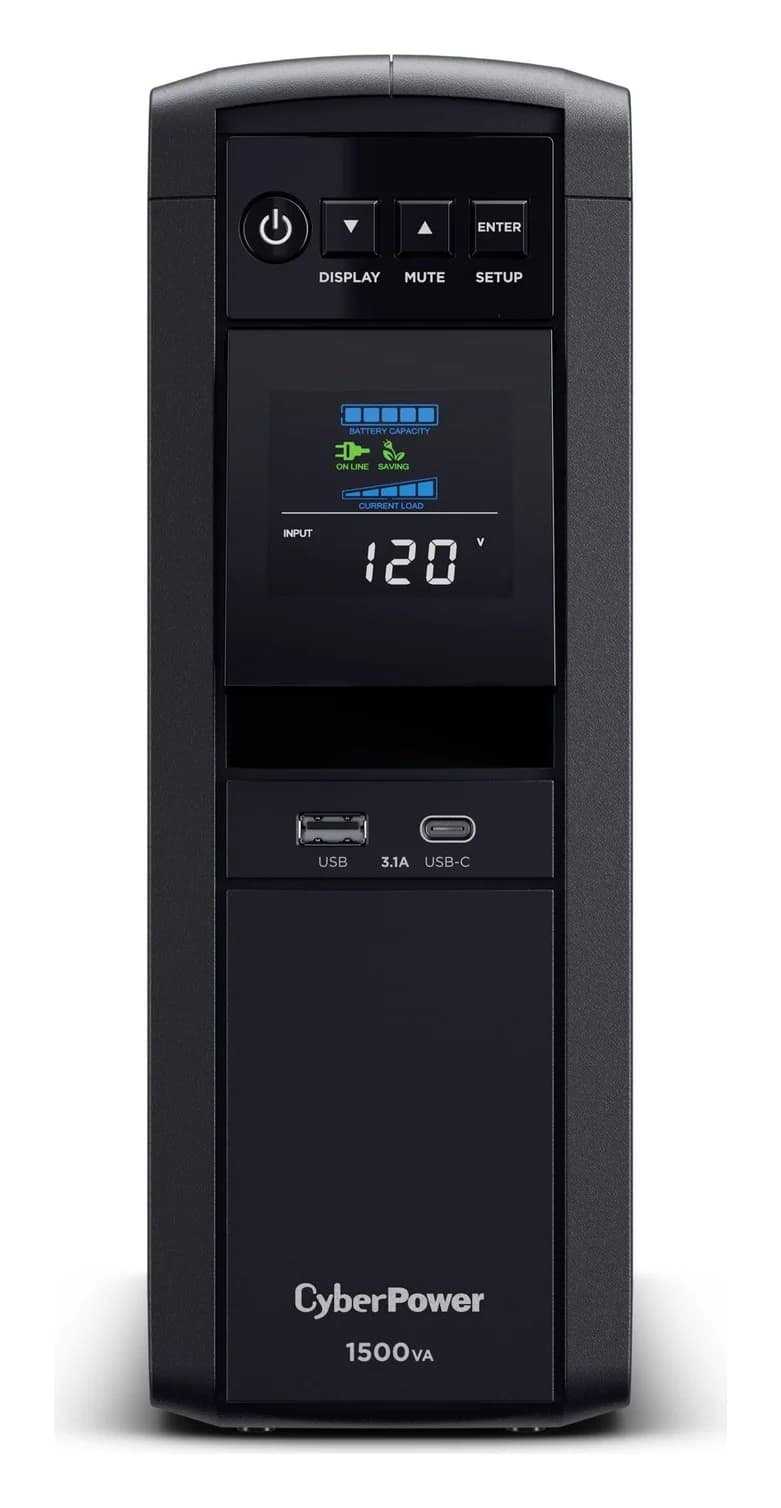
CyberPower CP1500PFCLCD or APC BE600M1 for a router, modem or NAS? Compare capacity, outlets, waveform, runtime curves and USB shutdown support before buying.