

Comparison
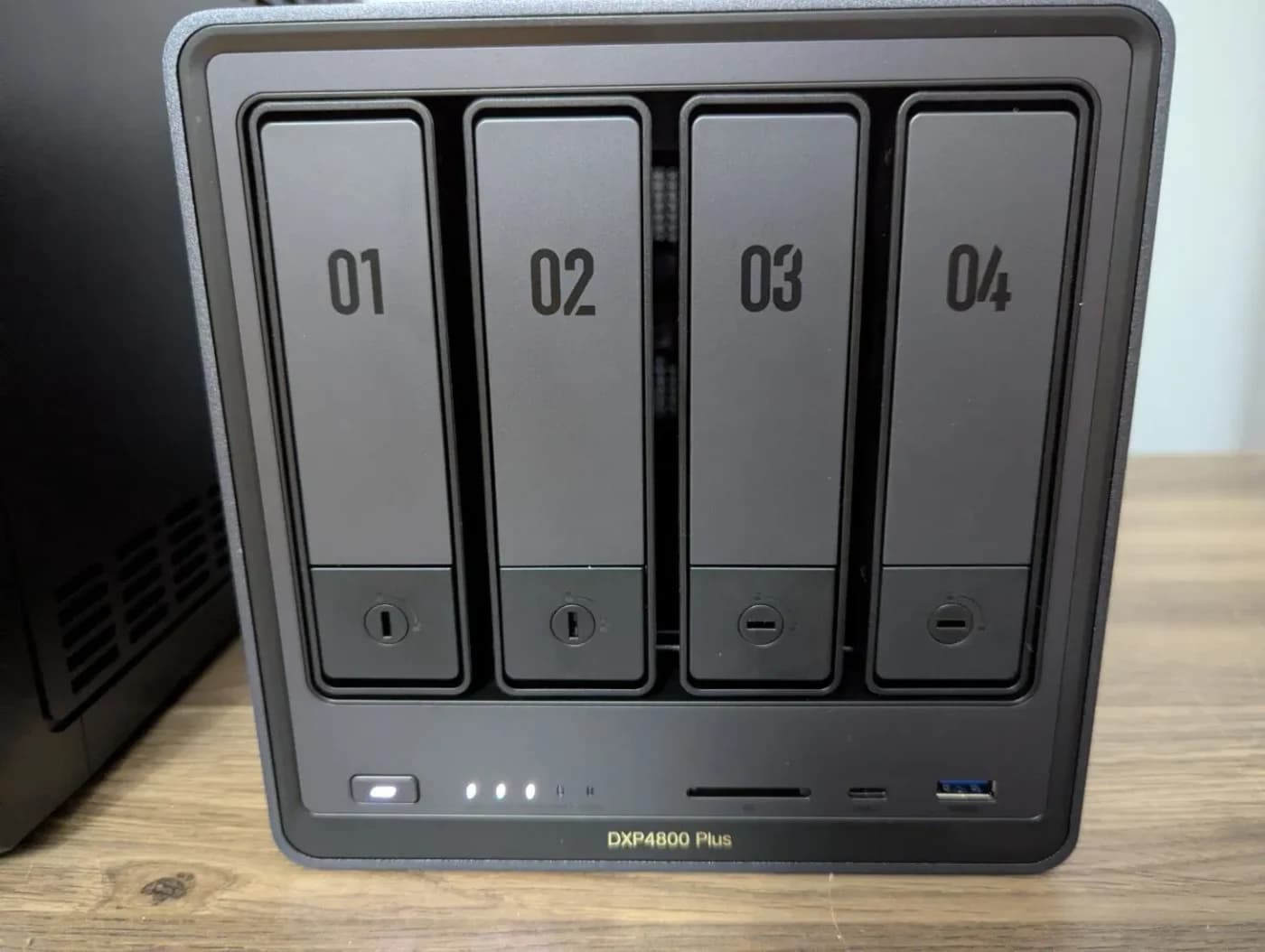
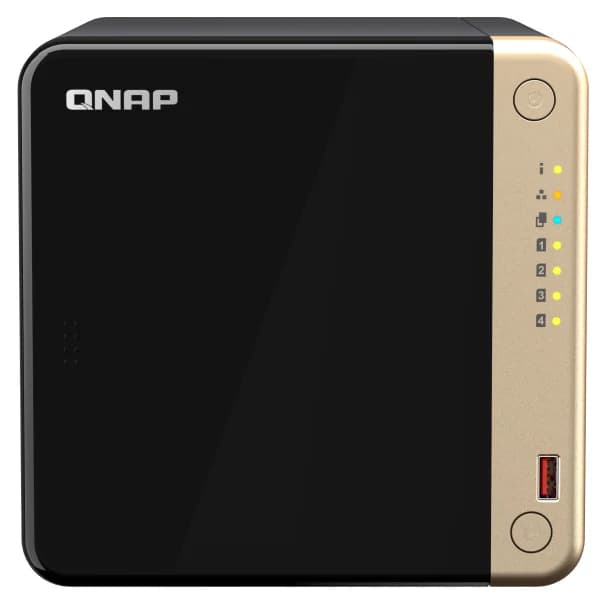
UGREEN NASync DXP4800 Plus vs QNAP TS-464
Which Four-Bay NAS Should You Buy?
Compare the UGREEN DXP4800 Plus and QNAP TS-464 on ports, expansion, apps and complete drive orders, and pick the right four-bay NAS.
By thisPING EditorialUpdated November 5, 20268 min read2 picks
On this page · Our picks at a glance
Our picks at a glance
- 1
our pick for a 10GbE workstation
10 Gbps port · 4 bays
Choose for: our pick for a 10GbE workstation
Check before buying: there is no PCIe slot (UGREEN's spec lists PCIe Expansion as "-") and no UGREEN-brand drive expansion unit is documented for it, so the growth path is buying bigger drives or using the USB and M.2 slots.
- 2
our pick for apps and expansion
2.5 Gbps port · 4 bays
Choose for: our pick for apps and expansion
Check before buying: 10GbE is an extra purchase, and the Celeron N5095 with DDR4 is a step behind the DXP4800 Plus's Pentium Gold 8505 with DDR5 on paper.
Buy the UGREEN NASync DXP4800 Plus if speed out of the box matters most: it has a built-in 10GbE port, 8 GB DDR5 expandable to 64GB, and two M.2 NVMe slots. Buy the QNAP TS-464 if you value QNAP's mature QTS 5 app ecosystem and its longer expansion path: one PCIe Gen 3 x2 slot takes a 10GbE card, and QNAP documents USB expansion with the four-bay TR-004 enclosure. Both are diskless four-bay NAS enclosures, so the drives are a separate order either way.
Official specifications checked November 4, 2026. Recommendations are based on the makers' own pages, not physical testing.
Quick picks
Compare specifications and all conditions
UGREEN NASync DXP4800 Plus
- Best for
- A 10GbE workstation and fast transfers
- Documented capacity maximum
- 144TB (4x 32TB + 2x 8TB)
- Expansion slots and units
- No PCIe slot; no maker expansion unit documented
All specifications
- Processor
- Intel Pentium Gold 8505, 5 cores, 6 threads
- Memory
- 8 GB DDR5, expandable to 64GB
- Ethernet
- 1x 10GbE, 1x 2.5GbE
- 10GbE path
- Built in
- M.2 slots
- 2x M.2 NVMe
QNAP TS-464
- Best for
- QNAP apps and expansion beyond the box
- Documented capacity maximum
- 72 TB (four 24 TB drives, RAID 5)
- Expansion slots and units
- One PCIe Gen 3 x2 slot; TR-004 USB expansion
All specifications
- Processor
- Intel Celeron N5095, quad-core, burst up to 2.9 GHz
- Memory
- 8 GB DDR4 built-in
- Ethernet
- 2x 2.5GbE
- 10GbE path
- Optional PCIe card in the PCIe Gen 3 x2 slot
- M.2 slots
- 2x M.2 2280 PCIe Gen 3 x1
Full comparison table
Swipe to compare. Row labels stay visible.
| Specification | UGREEN NASync DXP4800 Plus | QNAP TS-464 |
|---|---|---|
| Best for | A 10GbE workstation and fast transfers | QNAP apps and expansion beyond the box |
| Processor | Intel Pentium Gold 8505, 5 cores, 6 threads | Intel Celeron N5095, quad-core, burst up to 2.9 GHz |
| Memory | 8 GB DDR5, expandable to 64GB | 8 GB DDR4 built-in |
| Ethernet | 1x 10GbE, 1x 2.5GbE | 2x 2.5GbE |
| 10GbE path | Built in | Optional PCIe card in the PCIe Gen 3 x2 slot |
| M.2 slots | 2x M.2 NVMe | 2x M.2 2280 PCIe Gen 3 x1 |
| Documented capacity maximum | 144TB (4x 32TB + 2x 8TB) | 72 TB (four 24 TB drives, RAID 5) |
| Expansion slots and units | No PCIe slot; no maker expansion unit documented | One PCIe Gen 3 x2 slot; TR-004 USB expansion |
Scroll horizontally to see every column
| Specification | UGREEN NASync DXP4800 Plus | QNAP TS-464 |
|---|---|---|
| Best for | A 10GbE workstation and fast transfers | QNAP apps and expansion beyond the box |
| Processor | Intel Pentium Gold 8505, 5 cores, 6 threads | Intel Celeron N5095, quad-core, burst up to 2.9 GHz |
| Memory | 8 GB DDR5, expandable to 64GB | 8 GB DDR4 built-in |
| Ethernet | 1x 10GbE, 1x 2.5GbE | 2x 2.5GbE |
| 10GbE path | Built in | Optional PCIe card in the PCIe Gen 3 x2 slot |
| M.2 slots | 2x M.2 NVMe | 2x M.2 2280 PCIe Gen 3 x1 |
| Documented capacity maximum | 144TB (4x 32TB + 2x 8TB) | 72 TB (four 24 TB drives, RAID 5) |
| Expansion slots and units | No PCIe slot; no maker expansion unit documented | One PCIe Gen 3 x2 slot; TR-004 USB expansion |
- 10GbE ports built into the DXP4800 Plus
- 0PCIe slots in the DXP4800 Plus
- 1PCIe Gen 3 x2 slot in the TS-464
- 64GB maximum memory, DXP4800 Plus (UGREEN)
UGREEN NASync DXP4800 Plus: our pick for a 10GbE workstation
The DXP4800 Plus is the faster network box on paper. UGREEN's product page lists one 10GbE and one 2.5GbE RJ45 port, so a creator workstation on 10GbE and the rest of the network on 2.5GbE each get their own port without a switch upgrade. UGREEN quotes transfer speeds up to 1250MB/s through the 10GbE port, and notes a 10GbE connection has a theoretical maximum of 1.25GB/s with real file-copy speeds lower.
UGREEN
A four-bay NAS with an Intel Pentium Gold 8505, 8 GB DDR5, one 10GbE and one 2.5GbE port, and two M.2 NVMe slots.
Check package and model options
- 10 Gbps port
- 4 bays
- Intel Pentium Gold 8505, 12th generation, 5 cores and 6 threads, with Intel Quick Sync Video
- 8 GB DDR5, expandable to 64GB; a 128GB SSD serves as the system disk
- Two M.2 NVMe slots for SSD caching or a dedicated SSD pool
- RAID modes JBOD, Basic, 0, 1, 5, 6 and 10; HDMI output at 4K
- Front 10Gb/s USB-C and USB-A ports, a rear 5Gb/s USB-A port and an SD 3.0 card reader
- UGOS with Virtual Machine and Docker support; a 2-year warranty
The trade-offs: there is no PCIe slot (UGREEN's spec lists PCIe Expansion as "-") and no UGREEN-brand drive expansion unit is documented for it, so the growth path is buying bigger drives or using the USB and M.2 slots. Maximum storage is 144TB (4x 32TB drives plus 2x 8TB M.2 SSDs), and drives are sold separately. Our UGREEN DXP2800 vs DXP4800 Plus comparison covers the two-bay alternative, and UGREEN vs Synology covers the software-ecosystem trade in depth.
QNAP TS-464: our pick for apps and expansion
The TS-464 is the slower network box on paper but the more expandable one. QNAP's TS-464 page documents two built-in 2.5GbE (2.5G/1G/100M) ports, with port trunking reaching up to 589 MB/s. Its one PCIe Gen 3 x2 slot accepts QNAP expansion cards: a 10GbE PCIe network card such as the QXG-10G2TB, or QM2 cards that add M.2 slots and a 10GbE port together. With a QXG-10G2TB installed, QNAP measures up to 1,647 MB/s reads and 1,632 MB/s writes; QNAP marks the QXG-10G2TB EOL, so confirm current card availability and compatibility before ordering.
- Intel Celeron N5095 quad-core, burst up to 2.9 GHz, with built-in Intel UHD Graphics and AES-NI encryption
- 8 GB DDR4 built in
- Two M.2 2280 PCIe Gen 3 x1 slots for NVMe SSD cache, tiered storage or an Edge TPU
- Two 10Gbps USB 3.2 Gen 2 ports with One Touch Copy
- QTS 5 as the standard OS, with a documented optional switch to the ZFS-based QuTS hero
- Capacity up to 72 TB with four 3.5-inch 24 TB drives in RAID 5, in a footnote that also mentions two 2 TB M.2 SSDs; drives and SSDs sold separately
The trade-offs: 10GbE is an extra purchase, and the Celeron N5095 with DDR4 is a step behind the DXP4800 Plus's Pentium Gold 8505 with DDR5 on paper. QNAP's own QuTS hero FAQ asks for at least 8GB RAM (16GB for inline data deduplication), so an OS switch on the standard memory is tight. Our Synology DS224+ vs QNAP TS-264 comparison shows the same trade in the two-bay class.
Expansion: PCIe and USB versus none
This is the biggest structural difference. The TS-464 has a PCIe Gen 3 x2 slot and QNAP documents exactly what fits: 10GbE and QM2 network cards, a Wi-Fi 6 adapter, and up to 16 hard drives total by connecting a TL-D1600S expansion unit for up to 330TB of space. For a smaller step, the TR-004 is a four-bay USB 3.2 Gen 1 (5Gbps) enclosure with multiple RAID configuration options; QNAP states its storage pool stays a separate pool on the NAS, cannot be merged into the NAS's own, and that NAS applications cannot be installed on it.
The DXP4800 Plus has no PCIe slot and no maker expansion unit. Its upgrade paths are internal: larger drives, the two M.2 NVMe slots, or USB devices on the front 10Gb/s ports.
Source: UGREEN and QNAP product pages (linked above)
Network: match ports to real transfer targets
A 10GbE port only pays off when the whole path supports 10GbE: UGREEN's own checklist requires a computer with a 10GbE port, a 10GbE switch or direct link, and drives and RAID fast enough to sustain the workload — one HDD cannot deliver 10GbE throughput on its own. For a household that mostly streams media and backs up laptops, both NAS are faster than a gigabit network needs, and the TS-464's dual 2.5GbE is plenty. Our multi-gig switch guide covers the switch side.
- Yes: DXP4800 Plus: 10GbE port built in; needs 10GbE gear on the other end
- Partly: TS-464: two 2.5GbE ports trunked reach up to 589 MB/s (QNAP figure)
- Partly: TS-464 with a 10GbE PCIe card: QNAP measures up to 1,647 MB/s reads
- No: Either NAS with one HDD and a gigabit switch: far below multi-gig speeds
Apps, media and virtualization
Both platforms cover the bases. The TS-464 ships with QTS 5 and supports Virtualization Station for Windows and Linux virtual machines, Container Station, Hybrid Backup Sync, snapshots and the Plex Media Server QNAP package; an HDMI output lets you attach keyboard, mouse and monitor and use it like a PC. The DXP4800 Plus runs UGOS with Virtual Machine and Docker support, and its Pentium Gold 8505 supports Intel Quick Sync Video for compatible hardware-transcoding workloads, including Plex in Docker per UGREEN's own guidance. Verify current Plex installation and transcoding support on either platform before buying. Neither platform's real-world transcoding capacity is measured here — our best NAS for Plex guide goes deeper.
Complete four-drive order and backup destination
Both enclosures arrive without drives, so budget the drives as their own line. For a general-purpose start, four equal NAS-rated drives in RAID 5 — the same common plan as in our four-bay NAS roundup — with the drive choice made in our best NAS hard drives guide. The TS-464's 72 TB figure is exactly that plan with four 24 TB drives; the DXP4800 Plus tops out at 144TB with four 32 TB drives plus two 8 TB M.2 SSDs.
Pick the network path
10GbE now: DXP4800 Plus. 10GbE later: TS-464 plus a PCIe 10GbE card.
Order the drives
Four equal NAS-rated drives, checked against the maker's compatibility list.
Plan the M.2 slots
Cache or a separate SSD pool for containers and virtual machines.
Keep an independent backup
A NAS is storage, not a backup; see our NAS vs cloud guide and UPS for router and NAS.
How we choose
We have not tested either NAS. Every spec here comes from UGREEN's and QNAP's own product pages — processors, memory, ports, M.2 slots, RAID modes, capacity maximums and the TR-004 expansion rules — fetched and checked November 4, 2026. Transfer-speed figures (1250MB/s, 589 MB/s, 1,647 MB/s) are the makers' own published numbers, not our measurements. Picks follow from port arithmetic and documented expansion paths, not brand preference. Full method: How we choose.
Buying guide
Choose by your first upgrade, not the spec sheet. If you already have 10GbE at the desk, the DXP4800 Plus works on day one; if you might want 10GbE, QM2 cards or a surveillance expansion later, the TS-464's PCIe slot and documented expansion units are the safer bet.
Memory ceilings differ. UGREEN documents expansion to 64GB for Docker, virtual machines and photo libraries; QNAP officially specifies the built-in 8 GB DDR4, while the 16 GB ceiling on its page appears in review quotations, and its QuTS hero FAQ asks for more memory for deduplication. If virtualization is the plan, verify the upgrade ceiling with QNAP first.
Warranty and support. UGREEN states a 2-year product warranty; QNAP publishes warranty terms per region and a product support status page. Neither maker's future firmware cadence is promised here.
Verdict
The UGREEN NASync DXP4800 Plus is the better pick for most buyers who know they want fast local transfers: its built-in 10GbE and 2.5GbE ports, DDR5 memory expandable to 64GB and two M.2 NVMe slots deliver the speed now, and its Pentium Gold 8505 handles Docker and virtual machines comfortably on paper. Choose the QNAP TS-464 when the ecosystem and the upgrade path matter more than day-one speed: QTS 5's app catalog, a PCIe slot that can take a 10GbE card, and QNAP's documented expansion route to more bays make it the more flexible long-term platform, at the cost of a slower built-in network and older-generation internals.
Frequently asked questions
Is the UGREEN DXP4800 Plus better than the QNAP TS-464?
For raw hardware, yes: the DXP4800 Plus has a built-in 10GbE port, newer DDR5 memory expandable to 64GB, and a 12th-generation Intel Pentium Gold 8505, while the TS-464 uses an Intel Celeron N5095 with two 2.5GbE ports and DDR4. The TS-464 answers with QTS 5, a PCIe slot for adding a 10GbE card, and QNAP's documented expansion options. Pick UGREEN for out-of-the-box speed, QNAP for apps and expansion.
Can the QNAP TS-464 reach 10GbE?
Not with its built-in ports: they are 2.5GbE. QNAP's 10GbE example installs a PCIe network card, the dual-port QXG-10G2TB, in the TS-464's one PCIe Gen 3 x2 slot and measures up to 1,647 MB/s reads; QNAP marks that example card EOL, so check current card availability and compatibility before ordering. Trunking the two built-in 2.5GbE ports reaches up to 589 MB/s. A 10GbE upgrade is an extra purchase, not a feature of the standard enclosure.
Do these NAS include hard drives?
No. Both are diskless. QNAP's 72 TB figure assumes four 3.5-inch 24 TB hard drives in RAID 5, in a footnote that also mentions two 2 TB M.2 SSDs, and QNAP states that hard drives and SSDs are sold separately. UGREEN's 144 TB maximum uses four 32 TB drives plus two 8 TB M.2 SSDs. Plan the drives as a separate part of the order, and check the maker's compatibility lists before buying.
Which NAS is better for Plex and Docker?
The DXP4800 Plus supports Docker and virtual machines in UGOS, and its Pentium Gold 8505 supports Intel Quick Sync Video, which can assist compatible hardware-transcoding workloads. The TS-464 ships with QTS 5 and supports Container Station and Virtualization Station, with built-in Intel UHD Graphics and an HDMI output to use the NAS like a PC; Plex offers a QNAP package, so verify current installation and transcoding support before buying. Neither platform's transcoding behavior has been measured here.

Related guides
Comparison · NAS
QNAP TS-464 vs Synology DS425+: Which Four-Bay NAS Should You Buy?
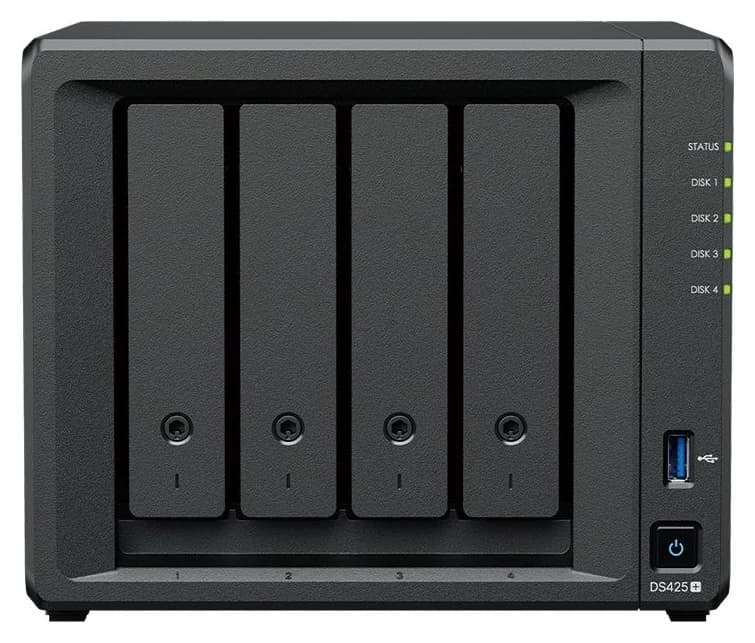
The four-bay TS-464 and DS425+ compared at equal disk capacity: memory, networking, Plex support, backup and recovery, plus a full drive order and disk-order checklist.
Comparison · NAS
Seagate IronWolf Pro 20TB vs WD Red Pro 20TB: Which NAS Drive Set?
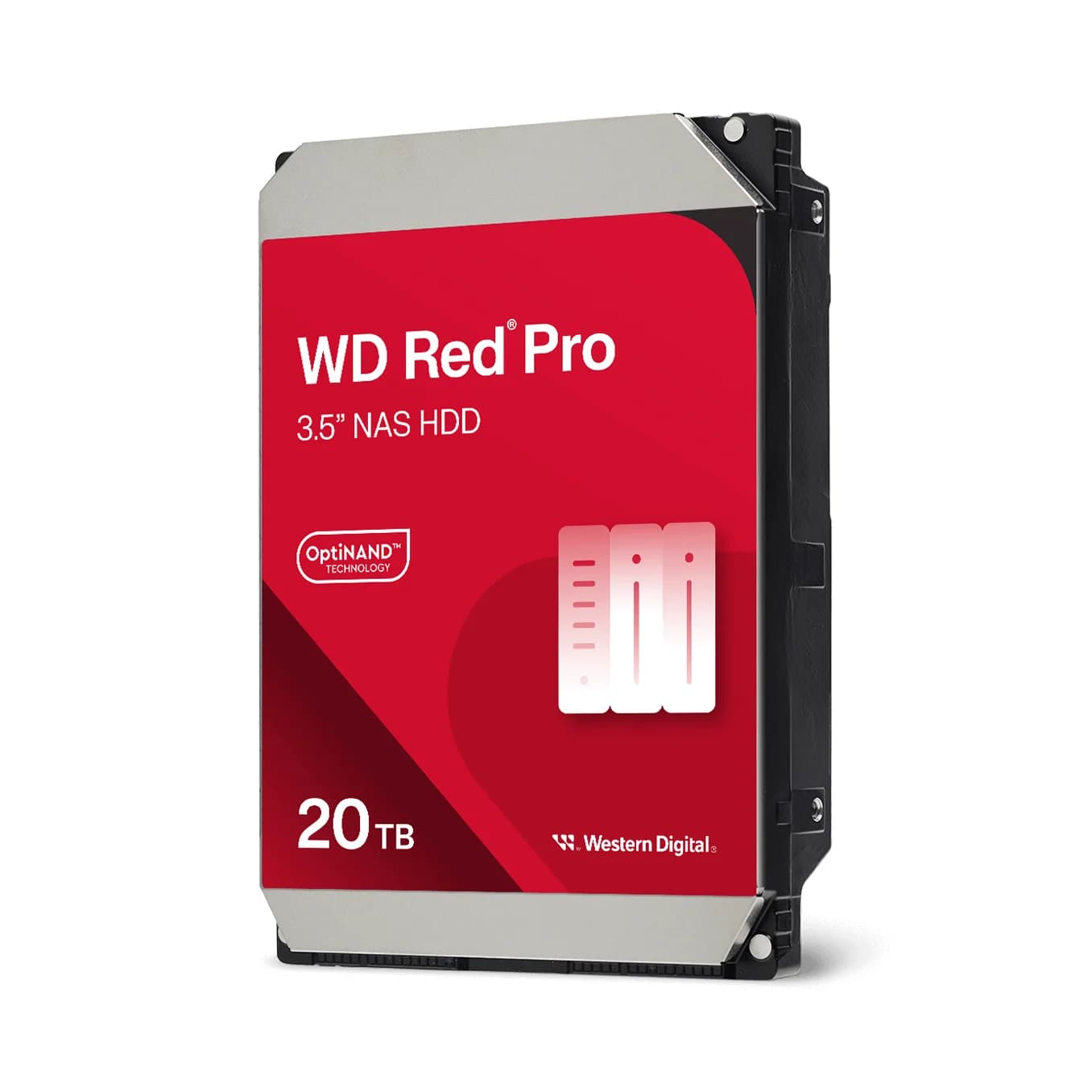
Compare ST20000NT001 and WD202KFGX on workload, cache, warranty and enclosure support, then plan usable capacity and an independent backup.
Comparison · NAS
UGREEN NASync DXP2800 vs QNAP TS-264: Which Two-Bay NAS Should You Buy?

DXP2800 vs TS-264 compared at equal drive capacity: CPU, memory revisions, dual 2.5GbE, M.2 slots, UGOS vs QTS software, backup workflow and recovery.